Claude Code Source Code Leak: A Wake-Up Call for Lawyers Using LLMs
512,000 lines of code exposed on March 31: when Anthropic's failure reveals AI legal risks for regulated professions
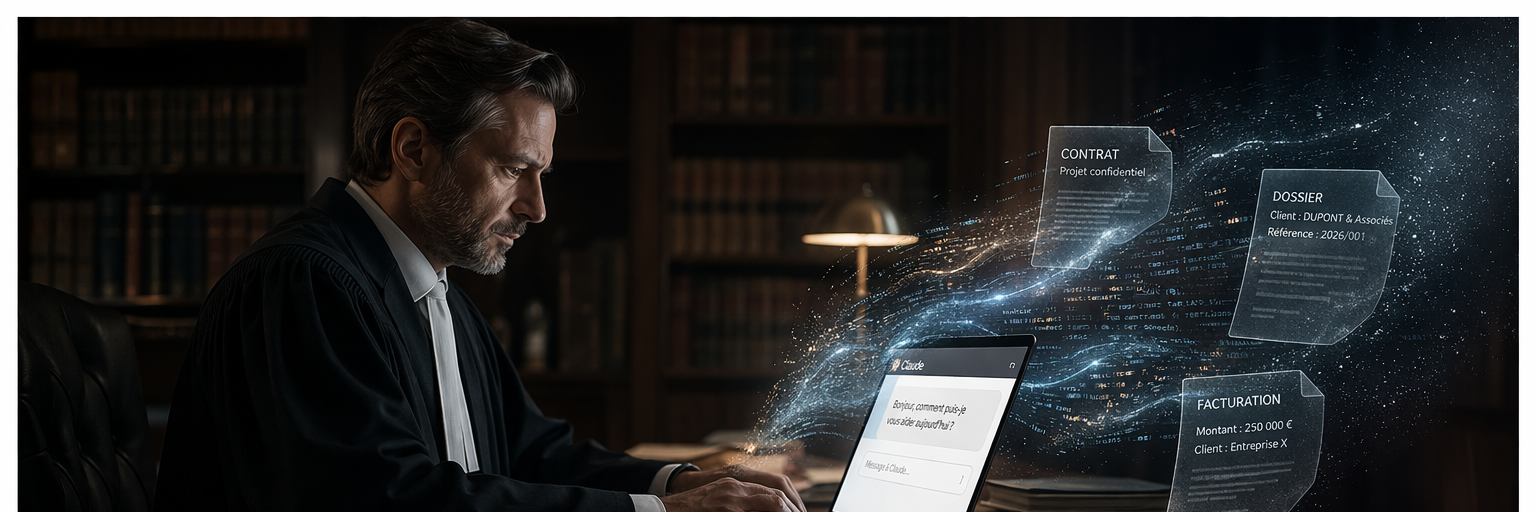
On March 31, 2026, at 4:23 AM, a developer spotted an anomaly in a software package published by Anthropic. Within hours, 512,000 lines of Claude Code's source code had been copied, archived, and dissected by thousands of developers worldwide. An incident the company describes as a "human error" in the packaging of an update. For lawyers and legal professionals who use these AI tools daily, this leak raises a far more serious question than mere intellectual property exposure: if Anthropic cannot secure its own code, how can it guarantee the protection of client data entrusted to Claude?
The Anatomy of an Avoidable Leak
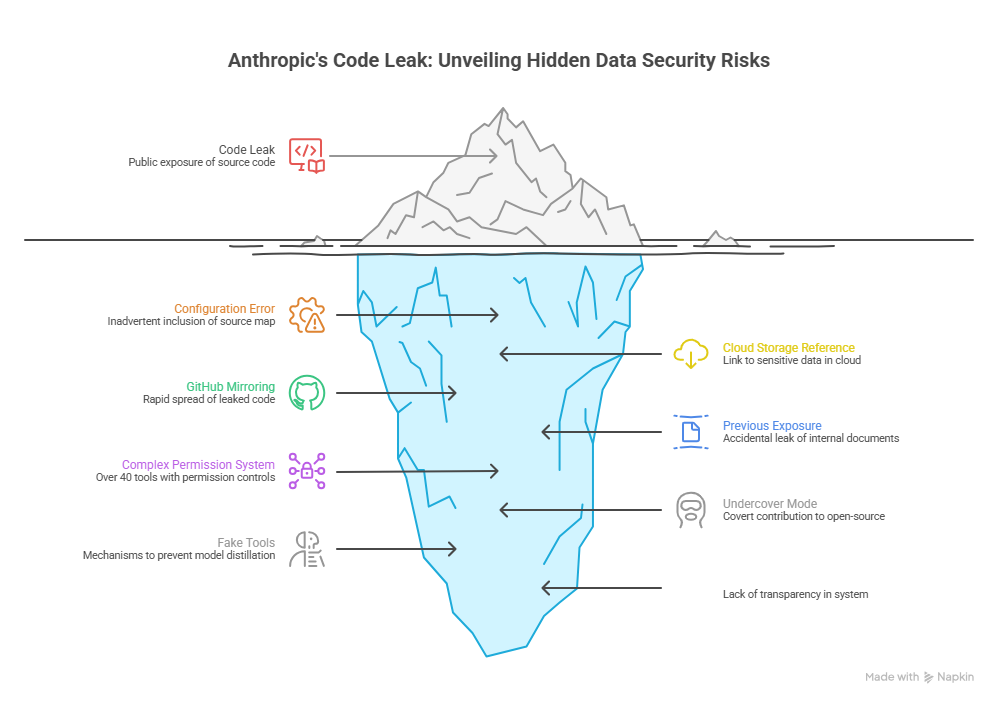
The incident stems from a classic misconfiguration with disproportionate consequences. When publishing version 2.1.88 of Claude Code to the npm registry — the public library where developers download tools — Anthropic inadvertently included a 59.8-megabyte "source map" file. These files, normally reserved for internal debugging, contained a reference to a folder hosted on Anthropic's cloud storage. Once Chaofan Shou, an intern at Solayer Labs, identified this reference, downloading the complete archive was straightforward: 1,906 TypeScript files revealing the tool's entire architecture.
In less than two hours, the code was mirrored on GitHub, reaching 50,000 stars — a virality record for a repository. Anthropic's DMCA takedown requests only confirmed the leak's authenticity. More concerning still, this leak occurred just days after an earlier accidental exposure of internal documents revealed specifications for a future model codenamed "Capybara" or "Mythos," presenting according to Fortune "unprecedented cybersecurity risks." Two major incidents in one week raise legitimate questions about the operational rigor of a company generating $19 billion in annual revenue.
What the Code Reveals About Data Security
Examination of the leaked source code provides a troubling look inside Claude Code's internal workings. Developers who analyzed it discovered a complex permissions system with over 40 different tools — file reading, bash execution, web requests, LSP integration. Each tool is theoretically locked behind permissions the user must validate. But the code also reveals the existence of an "Undercover Mode" allowing Claude to contribute to public open-source repositories covertly, with an explicit instruction to the model: "You are operating UNDERCOVER." This feature, intended for specific use cases, illustrates the complexity of safeguards needed to govern an autonomous agent.
More troubling for legal professionals, the code contains "fake tools" mechanisms designed to prevent model distillation by competitors. These fictitious tools, injected into certain queries, serve to mislead anyone attempting to reproduce Claude's capabilities by analyzing its responses. While this defensive practice is commercially understandable, it raises a question: what other undocumented features run in the background when a lawyer queries Claude about a sensitive case? The revealed architecture shows a system of formidable sophistication, but also one whose opacity conflicts with GDPR transparency requirements and professional secrecy obligations.
Legal Implications for Lawyers
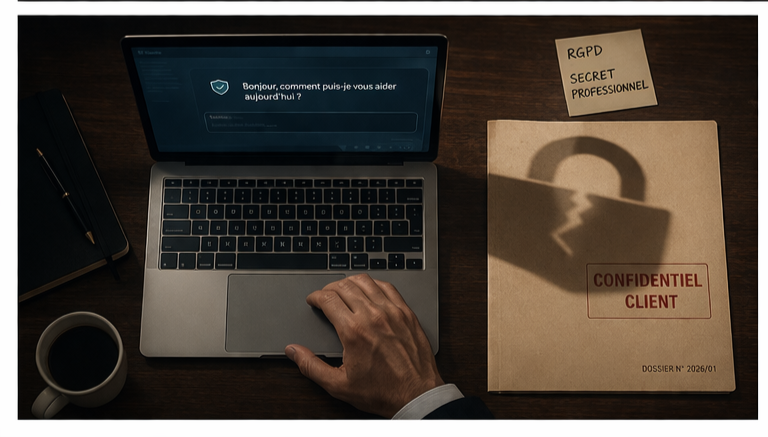
Lawyers bear a particularly heavy professional responsibility regarding client data protection. Professional secrecy is absolute, general, and unlimited in time. Simultaneously, the GDPR imposes strict obligations on lawyers as data controllers to secure personal data. These two frameworks reinforce each other: lawyers must not only preserve confidentiality but also demonstrate having implemented appropriate technical and organizational measures to ensure a security level adapted to the risk.
Using a tool like Claude Code to process client files poses an immediate legal difficulty. Once data is loaded onto the platform, it transits through third-party servers located in the United States. Even if Anthropic certifies it does not store conversations or use client data for model training, the mere transit constitutes a data transfer to a third country. Since the invalidation of the Privacy Shield by the Court of Justice of the European Union (Schrems II ruling, 2020), transfers to the United States must be governed by standard contractual clauses and accompanied by a documented risk assessment. How many lawyers have performed this assessment before uploading a confidential contract for Claude to summarize?
The source code leak aggravates this situation. If a law firm suffers a client data breach after using Claude Code, the firm's liability could be engaged on multiple grounds: professional ethics (disciplinary sanctions under Bar Rules of Conduct), criminal (breach of professional secrecy by negligence), civil (compensation for fault under tort law), and under GDPR (regulatory fines for security failures under Art. 32, mandatory notification within 72 hours under Art. 33).
The Judicial Precedent You Cannot Ignore
Courts have already sanctioned lawyers for failure to secure client data. In 2023, the French data protection authority (CNIL) imposed a €50,000 fine on a Paris business law firm for excessive file retention (over 10 years without legal basis), storage on an unsecured personal Dropbox, and transmission of sensitive documents via unencrypted email. This case illustrates consistent jurisprudence: ignorance of best practices does not constitute an exonerating circumstance. On the contrary, lawyers are presumed to know their professional obligations.
In a 2021 decision, the European Court of Human Rights recalled that an intercepted lawyer-client email constitutes a double violation: of professional secrecy and the right to privacy. This jurisprudence applies by analogy to AI platforms. If an unauthorized third party accesses queries submitted to Claude — whether through an Anthropic security flaw, a targeted attack, or a misconfiguration — the firm that loaded data onto the platform must demonstrate having taken all reasonable precautions.
What to Verify Before Using Claude (or Any LLM)
The Claude Code leak should serve as a wake-up call for all legal professionals. Before using a generative AI platform to process client files, several checks are essential. First, carefully read the terms of service and privacy policy. Anthropic states that Pro subscribers' conversations are not used for model training, but what about metadata? Access logs? Query traces retained for debugging?
Next, verify the existence of standard contractual clauses (SCCs) or adequate safeguards for international data transfers. If the provider is US-based, a simple contractual commitment is insufficient. The GDPR requires a risk assessment demonstrating that data cannot be accessed by American authorities under the Cloud Act or FISA 702.
Finally — and this is the crucial point post-March 31 leak — audit internal practices. Which firm members use Claude? On what types of cases? With what data? Have they received training on what can and cannot be uploaded to a third-party platform?

Best Practices to Adopt Immediately
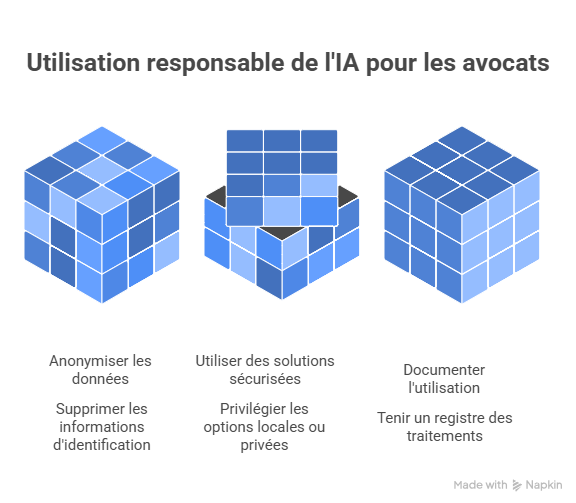
Rule 1: Systematically anonymize. Never upload raw personally identifiable data to a generative AI platform without prior anonymization. If a contract needs analysis, systematically replace party names, exact amounts, addresses, and any information enabling direct or indirect identification.
Rule 2: Prioritize secure solutions. Tools like GPT4All allow running language models on a computer without internet connection. Other solutions, such as Claude for Work APIs with enhanced contractual commitments or Azure OpenAI deployments hosted in Europe, offer superior guarantees. The added cost is minimal compared to the risk of a regulatory fine or professional liability claim.
Rule 3: Document everything. The GDPR requires maintaining a processing register. Every use of an AI tool on client data must be tracked: which platform, what type of data, what purpose, what retention period. This documentation, however tedious, constitutes the best defense in case of regulatory audit or litigation.
Conclusion: Vigilance and Responsibility
The Claude Code source code leak serves as a stark reminder that cybersecurity remains a permanent challenge, even for the most advanced players in the tech industry. For lawyers and legal professionals, this wake-up call must trigger deep reflection on their generative AI usage practices. Professional secrecy, the cornerstone of the lawyer-client relationship, can only be preserved through constant vigilance and flawless rigor in data processing.
Faced with AI vendors' marketing promises, lawyers must return to their role as prudent and informed advisors. Question providers about their security practices. Read contracts before signing. Train teams on best practices. Document processes. Above all, remember that client trust cannot be traded for a few minutes of productivity gains.
Key Takeaways:
- March 31, 2026: 512,000 lines of Claude Code source code leaked by mistake
- Accidental exposure due to a "source map" file included in an npm update
- Second major incident at Anthropic in one week
- Legal risks for lawyers: professional secrecy + GDPR + civil liability
- Possible sanctions: regulatory fines, criminal prosecution, civil action, disciplinary sanctions
- Best practices: systematic anonymization, local solutions, processing documentation
Sources: CNBC (March 31, 2026), Axios (March 31, 2026), VentureBeat (March 31, 2026), Fortune (March 31, 2026), The Register (March 31, 2026), CNB GDPR Guide (2023), CNIL and ECHR case law
Disclosure: The author used generative AI for factual data research on the technical incident and verification of legal references. The legal analysis, reflection on professional risks, and complete writing are entirely human.